
Social enterpriseInternational
An organisation teaching social entrepreneurship to K–8 students
Founded an organisation to educate K–8 students on social entrepreneurship. It grew to many chapters with thousands of members.
Create a substantial real-world project that gives universities evidence of what you can do, not just what you can study. In 12 weeks, go from idea to completed project, professional portfolio and Showcase with the support of a CURIOO mentor.
Next cohort: December 2026 · Showcase in the week of 8 March 2027
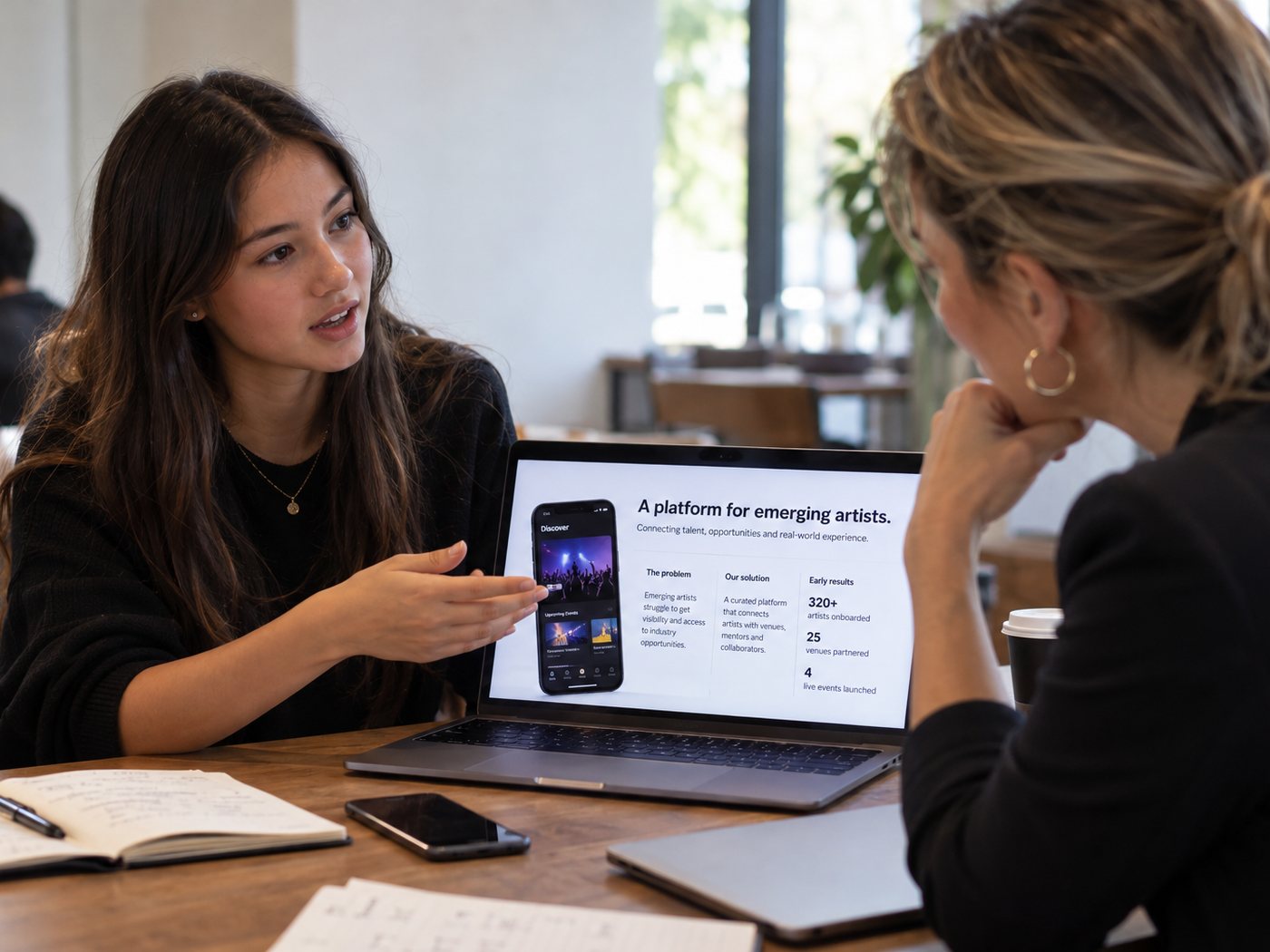
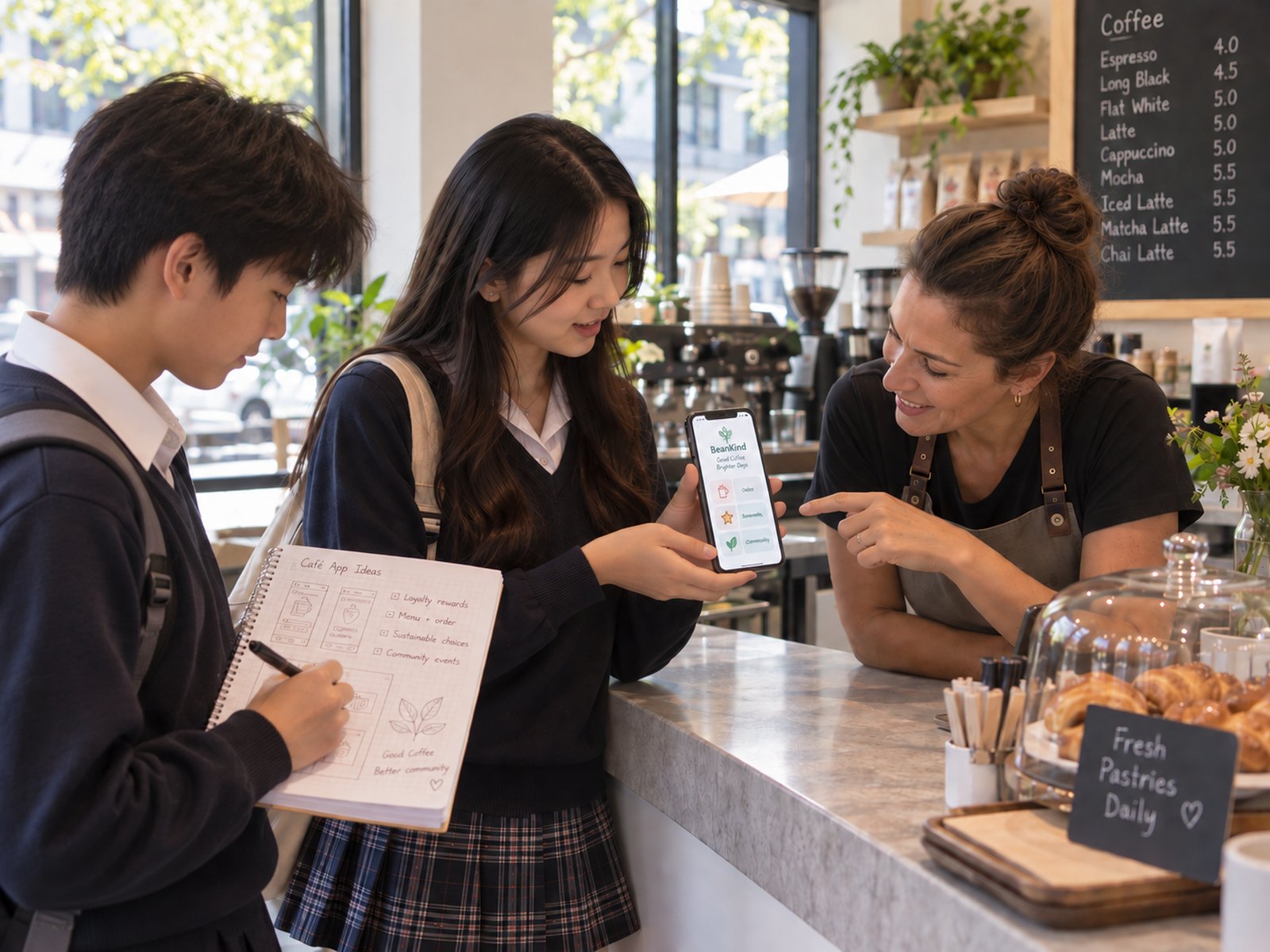
Grades show what you’ve learned. Your Signature Project shows what you can do. Twelve weeks of taking an idea of your own, testing it with real people, improving it and standing up to present it, with a mentor beside you.
You choose the idea: a product, a service, a campaign or a social enterprise. Over twelve weeks you frame the problem, design and build a first version, put it in front of real users, refine it from what they tell you, and present the result at a Showcase. Every step is documented, so at the end you hold a professional portfolio and a presentation you can talk about in any interview.
The Signature Project is yours: you enrol as an individual, work online in a cohort of no more than twelve, and keep everything you make. It is designed for you to present, talk about or include in your application essay.
From 2026, every UCAS application includes this question, answered alongside the question on why the student wants to study the course. A Signature project is a direct answer to it.






Caltech supplemental essay, 2026–27
Every college reads your application holistically, meaning your transcript and test scores are considered alongside your activities, projects, essays and recommendations.






National University of Singapore, asked of every applicant
HKU, CUHK and HKUST read a personal statement alongside grades. The University of Tokyo’s new College of Design asks for descriptions of “research activities, creative work, exhibitions, competitions”.








University College Utrecht
IE University invites “a portfolio of your work”. In France, every Parcoursup application has a section for activities outside school.




Quoted from UCAS and each university’s current admissions pages. CURIOO is not directly affiliated with any university shown, is not paid by these universities and, importantly, provides independent student support. Requirements change each year.
Each week has one live online session with your mentor and cohort, independent work on your project between sessions, and six milestone checkpoints so you always know where you stand. Expect 2 to 4 hours a week in total.
Each checkpoint is reviewed by the mentor, and parents receive a short update after each: what the student did, and what comes next.
We provide the specific structure you need for your project and the insights into how it fits into your application. Everything below is yours to keep and to show.
Every one of these began as a single idea and a first version tested with real people. That first stretch is what the Signature Project is: twelve weeks that turn an idea into something that exists, with the evidence to show for it.
Founded an organisation to educate K–8 students on social entrepreneurship. It grew to many chapters with thousands of members.
Produced and edited mental-health articles to uplift young people, read thousands of times, and hosted a podcast interviewing women leaders.
Set on studying biomedical engineering, she created a children’s medical book series to teach young children how to deal with emergencies, wounds and household medicines.
Programmed an AI to patrol an endangered turtle nesting site using drones, partnered with a resort, launched an open-source platform and expanded the project internationally.
Founded an organisation to make music education accessible, with a lead team and branches that reached thousands of students online.
Created a virtual musical-theatre camp for children aged 6 to 12 during the COVID-19 pandemic, and managed the camp’s Instagram, website and Facebook.
Worked on the development of cryptocurrencies, NFTs, DAOs and DApps, responsible for project, client and social-media management and supervising a number of employees.
Every good university application has two parts.
Signature builds that crucial part. The part that makes your child stand out.
In 12 weeks, with a mentor every week, your teenager takes one idea of their own and turns it into a finished project. They test it with real people, change it based on what they learn, and link it to the subject they want to study.
They finish with a real answer to the question every UK application now asks: “What else have you done to prepare outside of education?” In the US and Asia, it becomes an essay, an activities entry or a portfolio. At interview, it’s a story they can explain and defend, because they did the work.
Grades show what your teenager has learned. Signature shows what they can do.
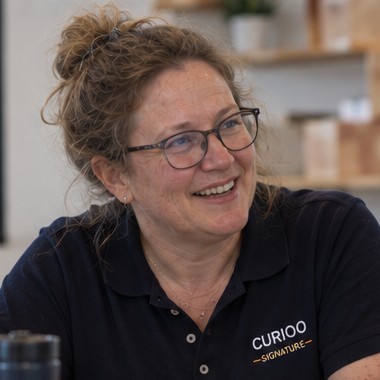
A certified CURIOO Mentor who has training in, and has taught, entrepreneurship through real student projects. Laura leads the cohort from week one to the Showcase, so she knows your child’s project, not just their name, and helps each student shape their project and tell its story. Sessions are live and online; between them, she reviews each checkpoint and replies within the week.
Guides for parents: what universities ask for beyond grades, and how a real project answers it →
One published price. Pay in full now, or reserve with a deposit and pay the balance by 23 November. A parent or guardian completes the payment; we confirm by email straight away and send the onboarding form.
Secure card payment by Stripe. The deposit is non-refundable.
Not ready for December? Tell us which 2027 start you have in mind and we email you when it opens.
Everything parents and students ask us. If yours is not here, send it below and we reply within one working day.
No. Many students arrive with a problem they have noticed rather than a solution, and some arrive with neither. The Project Finder gives you three concepts sized for twelve weeks, and the first two weeks are designed to shape an idea worth your time.
One session a week, online, at a fixed time for the cohort. The session time for the December cohort will be published here before enrolment closes and confirmed to you in the pre-start pack.
Sessions are recorded; catch up before the next checkpoint.
Between 2 and 4 hours: one live session of about an hour, and independent work on the project between sessions. Checkpoints fall every two to three weeks, so the load is steady rather than front-loaded.
The December cohort starts in early December 2026, pauses for the holidays from 21 December to 3 January, resumes on 4 January and ends with the Showcase in the week of 8 March 2027. Twelve teaching weeks in all. New cohort start: 4 January, 1 February, 1 March, 5 April, 3 May, 7 June, 5 July, 2 August, 6 September, 4 October, 1 November and 6 December.
Laura, a certified CURIOO Mentor who has training in, and has taught, entrepreneurship through real student projects, and who is screened before working with students. She leads the cohort for all twelve weeks, helping each student shape their project and tell its story.
The mentor is screened, all messaging is in the cohort group rather than one-to-one, every live session is recorded, and parents can raise a concern at any time. Our safeguarding statement sets out the standards in full.
Some don’t, and that is often the best portfolio. Students are assessed on the quality of their thinking, their evidence and their response to what they learned, not on whether the idea made money.
Yes. Every student who completes the twelve weeks and presents at the Showcase receives a CURIOO Signature Certificate of Completion. The portfolio and the recorded presentation are the substance you can include in an application; the certificate confirms you completed the programme.
A parent or guardian pays by card through Stripe. Reserve with a US$250 deposit (10%), and pay the balance of US$2,245 by 23 November 2026 using the personal payment link in your welcome email, with reminders a week and two days before; or pay the full US$2,495 now. From 24 November, places are paid in full. The deposit is non-refundable, and fees are not refundable once paid, so please check the dates before you pay.
Students who have attended a CURIOOkids Studio, and siblings of enrolled students, receive 15% off: enter the code CURIOOKIDS15 at checkout.
Yes, and you both save. When a family you refer enrols on any cohort, they enter the code REFER10 at checkout and give your child’s name; they save 10%, and once their place is confirmed we refund 10% of your fee to you. One discount code per enrolment; the referral and the CURIOO discount cannot be combined.
If your child has attended the sessions, done the required work and met the milestones but hasn’t finished their project by the Showcase, we continue mentor support free of charge for up to one month so they can complete it.
You receive a welcome email straight away with an onboarding form for the student’s details and your consents. A week before the start you receive the pre-start pack with the session time, what to prepare and how the platform works. After each of the six checkpoints you receive a short update on your child’s progress.